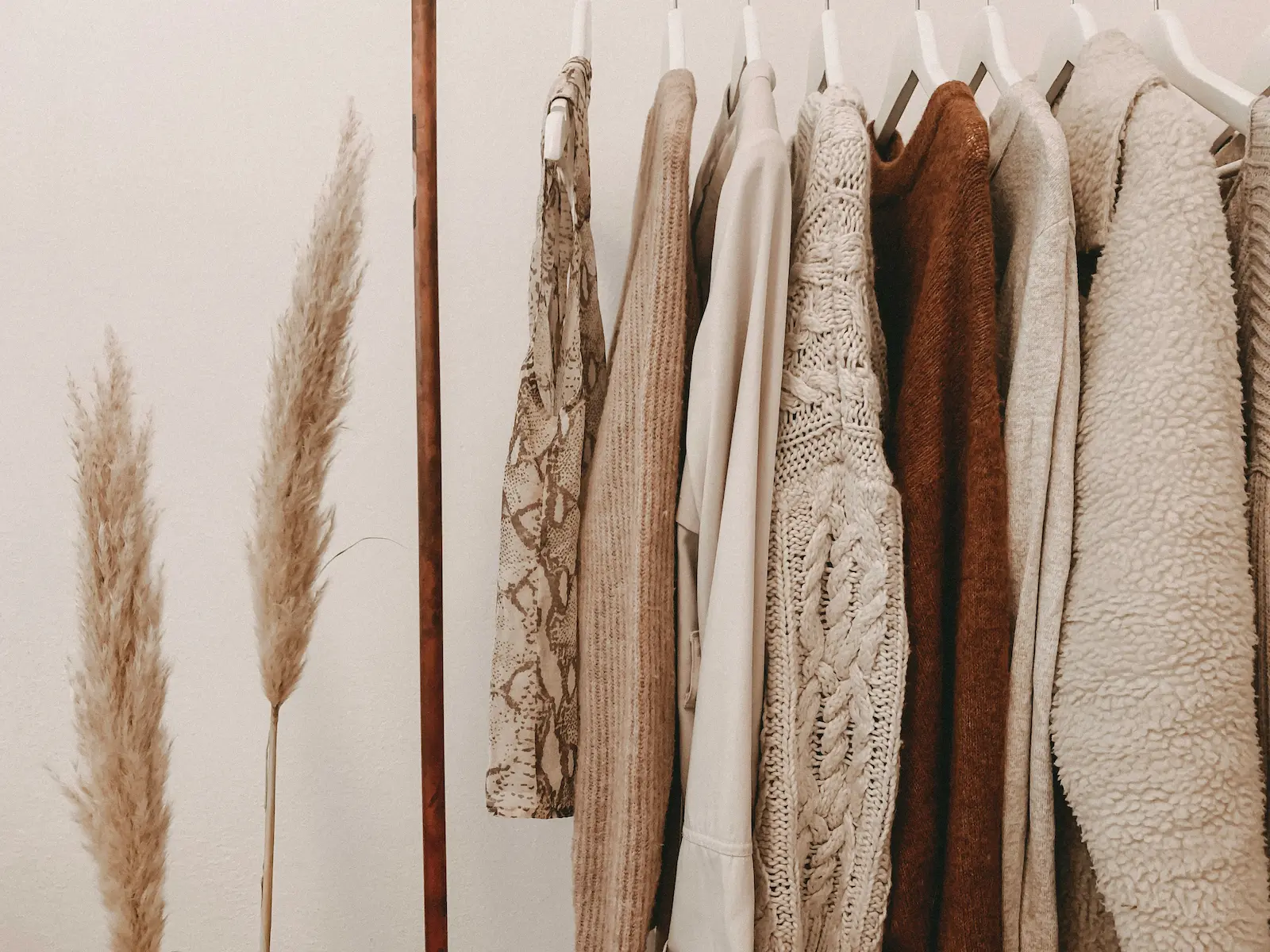
The average person in a wealthy country owns around 100 items of clothing and wears about 20% of them regularly. The capsule wardrobe isn't a trend or a minimalism project — it's the practical recognition that most of what's in your wardrobe isn't actually serving you. This guide is about fixing that, sustainably.
What a capsule wardrobe actually is
Not a specific number. Not a list from the internet. A deliberate edit of your own life.
The term was coined by London boutique owner Susie Faux in the 1970s and popularised by Donna Karan's "Seven Easy Pieces" collection in 1985. The original idea was simple: a small collection of essential, high-quality, timeless pieces that work together and can be supplemented seasonally with trend pieces you actually want.
What it has become in the age of lifestyle content is more prescriptive and often less useful: numbered lists, colour palette rules, and shopping guides that tell you to buy 37 specific things. This misses the point. A capsule wardrobe is defined by how the pieces relate to each other and to your actual life, not by hitting a number.
If you work from home and run on weekends, your capsule looks nothing like someone who commutes to an office and travels for work. The principles are the same. The contents are entirely different.
How many pieces you actually need
The number online content settles on is 33. The honest answer is: it depends.
Project 333, popularised by Courtney Carver, challenged people to dress with 33 items for 3 months including shoes and accessories. It's a useful exercise in clarifying what you actually reach for. But 33 isn't a universal law — it's a useful constraint for a period of deliberate editing.
Research from ThredUp's annual resale report consistently shows that people who consciously edit their wardrobe down report higher satisfaction with their clothing choices, less decision fatigue in the morning, and significantly lower annual spending on clothes. The number matters less than the intentionality behind it.
A practical starting range for most people in temperate climates: 25 to 50 items covering all seasons, with around 25 to 35 being sufficient for a single season if you live somewhere with more extreme weather variation and genuinely need two distinct wardrobes.
The core categories
These are the building blocks. Quantities depend on your life, not a formula.
How to build yours
In order. Skipping steps is why most people end up with capsule wardrobes that don't actually work.
Pull everything out. Everything. Sort into three piles: wear regularly, wear occasionally, haven't worn in over a year. The third pile is almost always larger than people expect. That's your data.
The first pile tells you what your capsule already contains. These are the pieces that already work for you. Notice what they have in common: colour, fabric, silhouette. That's your personal uniform emerging.
Not aspirational gaps — actual ones. The things you find yourself wishing you had on specific occasions. If you never have those occasions, the gap isn't real. Write down the three most frequent genuine gaps only.
Sell, donate, or swap. ThredUp, Poshmark, Vinted, and local clothing swaps are all options. Don't bin anything that's in decent condition — somebody wants it. This also funds new purchases if you need them.
One gap at a time, starting with the most frequent. Search secondhand first. If you're buying new, buy the best quality you can afford in that category. Wear before buying — borrow from a friend or hire if it's something you're unsure about.
Doing it sustainably
The most sustainable approach and the most sensible approach are the same thing.
The capsule wardrobe concept is inherently sustainable because it pushes against overconsumption. But it can be subverted: people use it as justification to buy a whole new set of "better" things, which defeats the environmental purpose entirely even if the individual pieces are organic cotton.
The hierarchy for filling gaps, in order of sustainability: first, use what you already own differently. Second, borrow or rent. Third, buy secondhand — a well-made secondhand piece in a material you'd otherwise avoid is still a significantly better choice than buying new organic cotton. Fourth, buy new from brands with genuine credentials when secondhand isn't available in your size or style.
Quality is the sustainability lever that gets talked about least. A well-made wool coat lasts 20 years. A poorly made one from technically sustainable materials lasts three. The carbon cost of manufacturing is divided over every year of use — durability is the multiplier that makes everything else count.
Mistakes most people make
The reasons capsule wardrobes fail are almost always the same. Knowing them in advance saves a lot of wasted effort.
You probably already own more of your capsule than you think. Buying before understanding what you have means you'll duplicate things and miss actual gaps.
The blazer you'd wear "if you went to more events." The heels for "occasions." A capsule is built for the life you actually have, not the one you think you should want.
An item in the right colour and the right material that doesn't fit you well will never be a capsule staple. You won't reach for it. Fit is non-negotiable, even secondhand.
Capsule wardrobes don't have to be beige. They need to be cohesive — which means they reflect your actual taste. A capsule of colours and prints you love works just as well as a greige one.